
By hitmind.ai | Published 2026-09-26 | Updated 2026-09-26
A b2b saas organic traffic drop is rarely a mystery — it almost always traces to one of five root causes: a Google algorithm update, content decay, technical regression, SERP feature displacement, or cannibalization. The difference between a two-week recovery and a six-month slide is how fast you attribute the decline. This guide gives you a triage SOP built on Google Search Console (GSC) so you can pinpoint the cause within hours, not weeks.
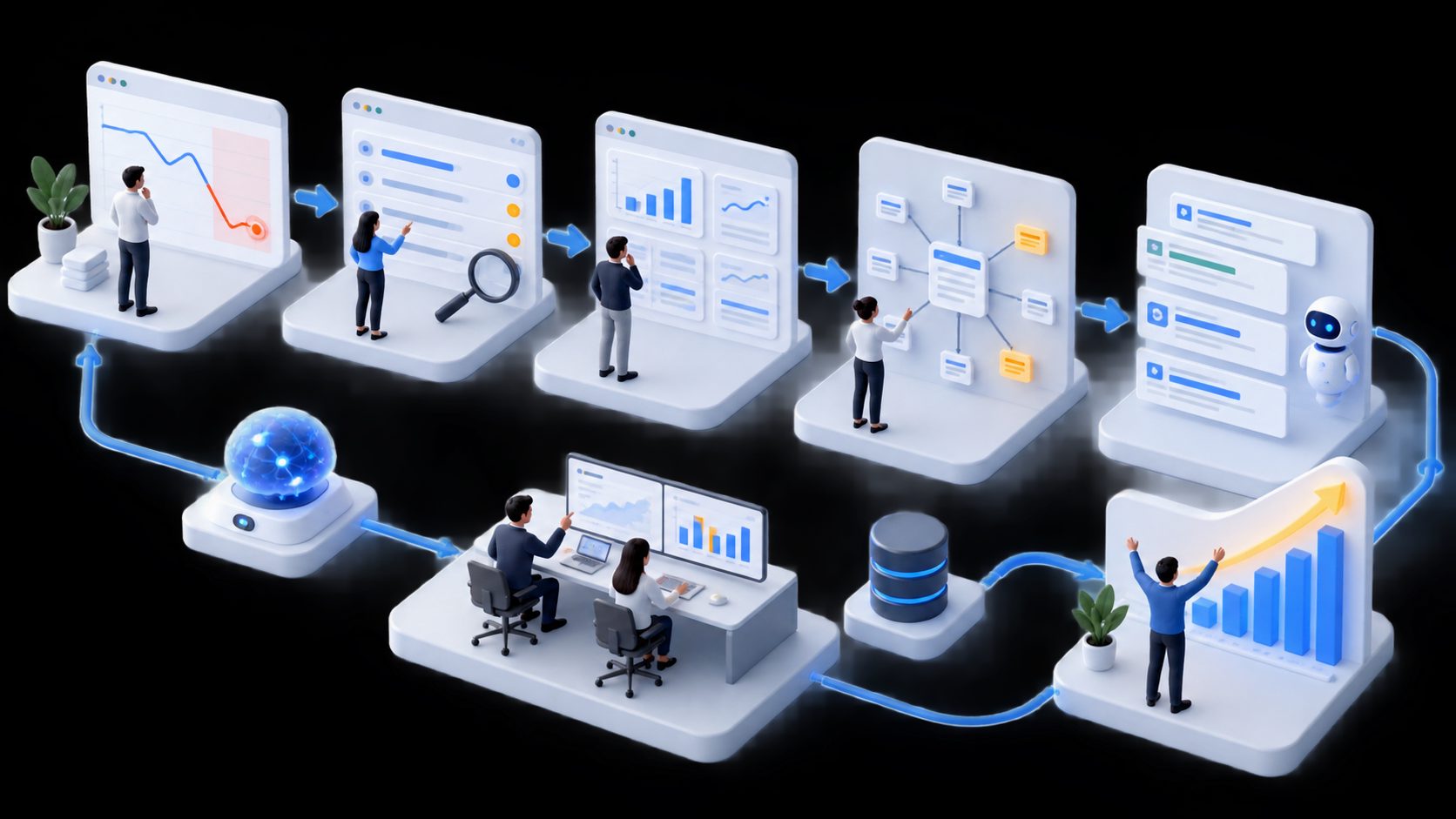
Step 1: Confirm It’s a Real Drop, Not a Data Artifact
Before diagnosing anything, verify the decline is genuine. A b2b saas organic traffic drop is a sustained decrease in organic clicks or impressions of 20%+ lasting at least 7–14 days — not a weekend dip or seasonal noise.
In GSC, open Performance → Search results, compare the last 28 days against the previous 28 days, and segment by:
- Country — sometimes the drop is one market, not global.
- Device — a mobile-only decline often signals a rendering or Core Web Vitals issue.
- Search appearance — a fall in "Product" or "Review snippet" impressions can mean lost rich results.
Check your analytics for tracking regressions too. A changed GA4 tag, a new consent banner, or a CDN misconfiguration can fake a traffic loss. Some "traffic drops" turn out to be measurement problems rather than lost rankings, so rule this out first.
Step 2: Localize the Drop to Queries, Pages, or Directories
Attribution means narrowing the blast radius. Export the GSC comparison data and sort by click difference. You’ll typically see one of three patterns:
| Pattern | Likely cause | Where to look next |
|---|---|---|
| One or two pages account for 60%+ of lost clicks | Content decay or a competitor overtaking those URLs | Page-level query analysis |
| An entire directory (e.g., /blog/ or /templates/) declined together | Algorithm update or site-level quality signal | Update timeline check |
| Clicks dropped but impressions stayed flat | SERP feature change or weaker title CTR | Manual SERP inspection |
This last row is the one most guides skip: flat impressions with falling clicks is a CTR problem, not a ranking problem. Google may have added an AI Overview, a forum carousel, or a video pack above you. Inspect the live SERP for your top queries before touching any content.
Step 3: Match the Timeline Against Known Causes
Overlay the drop date against likely triggers:
- Algorithm updates. Compare your decline window with Google’s documented ranking system updates. If the drop starts within days of a core update rollout, the fix is content quality and intent alignment — not technical tweaks.
- Site changes. Ask engineering what shipped in the 2–4 weeks before the drop: migrations, robots.txt edits, canonical changes, JS framework upgrades. SaaS sites frequently break SEO through routine deploys — a single noindex on a paginated series or a stripped canonical can cascade.
- Content decay. Pages older than 12–18 months often decay gradually as fresher competitors publish. If the decline is a slow bleed rather than a cliff, run a content decay analysis in Google Search Console to rank pages by click-loss velocity.
- Cannibalization. New pages targeting the same intent as existing winners split rankings. If two URLs now alternate in positions 8–15 for the same query, follow a cannibalization detection workflow to consolidate.
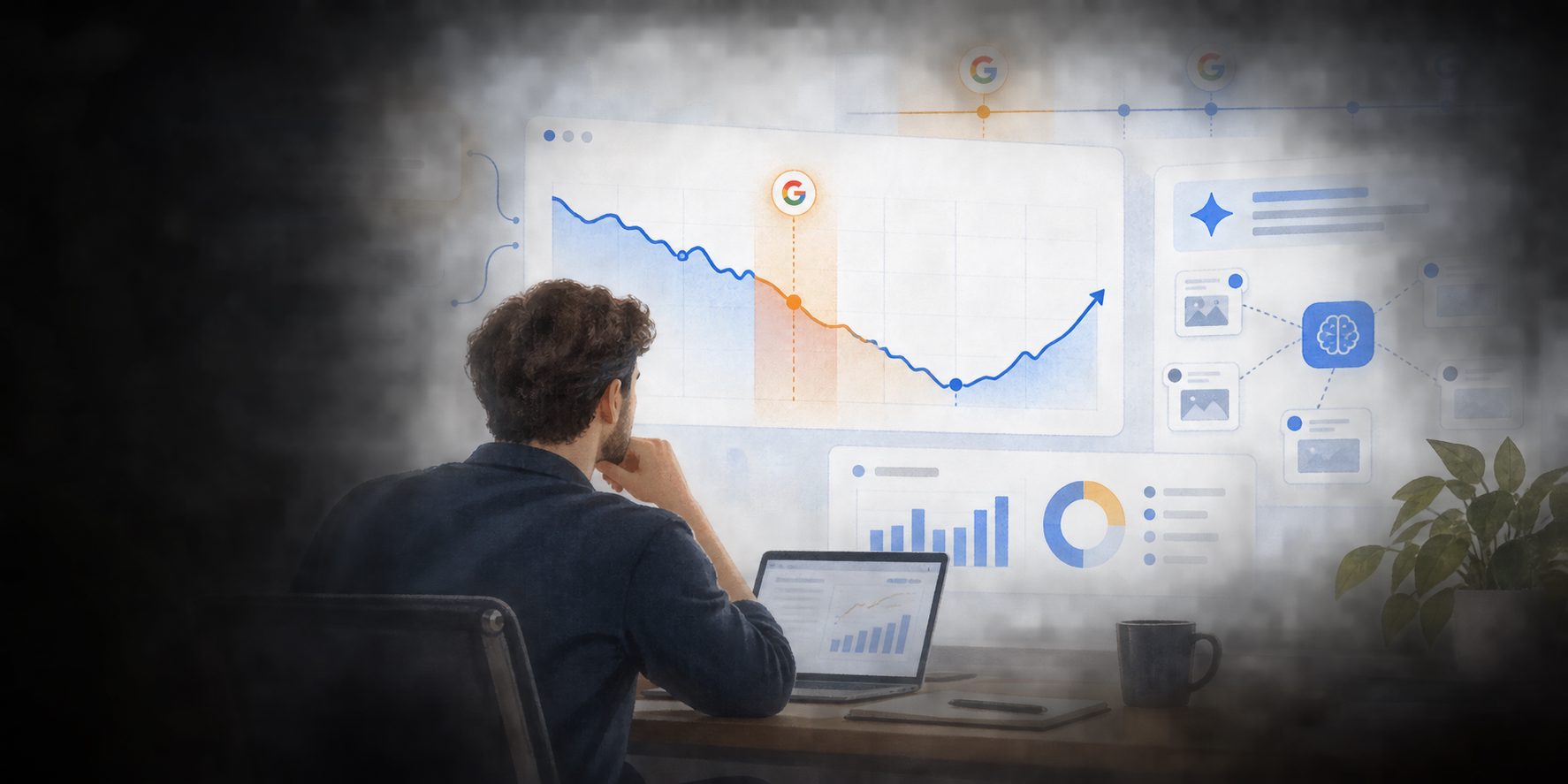
Step 4: Act on the Cause — the Recovery Playbook
Each cause has a different fix. Applying the wrong one wastes a quarter.
- Algorithm update: Refresh the affected pages for intent match, first-hand evidence, and depth. Don’t mass-edit titles — that’s cosmetic.
- Technical regression: Roll back or patch the deploy, then use GSC’s URL Inspection and validate the fix in Page Indexing. Request recrawl on priority URLs.
- Content decay: Update statistics, screenshots, and product references; expand sections where competitors now go deeper. Republish with a fresh date only when changes are substantive.
- SERP displacement: If an AI Overview now answers the query, target adjacent long-tail queries and strengthen structured data. If it’s a CTR issue, test titles that add specificity (numbers, year, "for B2B").
- Cannibalization: Merge or differentiate the competing URLs, 301 the weaker one, and update internal links.
For B2B SaaS specifically, prioritize pages tied to pipeline — comparison pages, integration pages, and bottom-funnel blog posts — over raw traffic volume. A revenue attribution framework helps you rank recovery work by dollar impact, not vanity clicks.
Step 5: Prove Recovery with Your Own Data
Recovery isn’t done until you can demonstrate it. Set a 28-day post-fix comparison in GSC and annotate what changed and when. Executives don’t need a traffic promise — they need evidence that attribution was correct and the fix worked.
This is exactly the philosophy behind HitMind: SEO work should be validated against your own Search Console data, not against generic benchmarks. If you want a fast external read on what’s broken today, the free SEO audit requires no signup and no credit card, and it flags indexation, cannibalization, and decay issues that often sit at the root of an unexplained decline. For teams tired of running this SOP manually every quarter, we wrote down how we think about automating it, and where a person should stay in the loop, in our SEO autopilot framework.
Frequently Asked Questions
How long does a B2B SaaS organic traffic drop take to recover?
Technical fixes can recover within 2–4 weeks after recrawl. Algorithm-related declines typically take until the next core update cycle, often 2–4 months, even with correct fixes.
Should I be worried if impressions dropped but clicks didn’t?
Usually not. Impression drops with stable clicks often mean you stopped ranking for irrelevant queries, or Google changed how it counts them. Focus on clicks and conversions.
Can AI Overviews cause a b2b saas organic traffic drop?
Yes — primarily on informational top-funnel queries. If impressions are flat but CTR fell sharply, check whether an AI Overview now appears for those queries and shift effort toward bottom-funnel and comparison keywords.
What’s the single most common cause for SaaS sites?
In practice: content decay on blog content older than 18 months, compounded by engineering deploys that quietly alter canonicals or internal linking.
How do I tell a Google update hit from a penalty?
Manual actions appear in GSC under Security & Manual Actions — that’s a penalty. A core-update hit shows no message; rankings simply decline. The diagnosis SOP above handles both.